
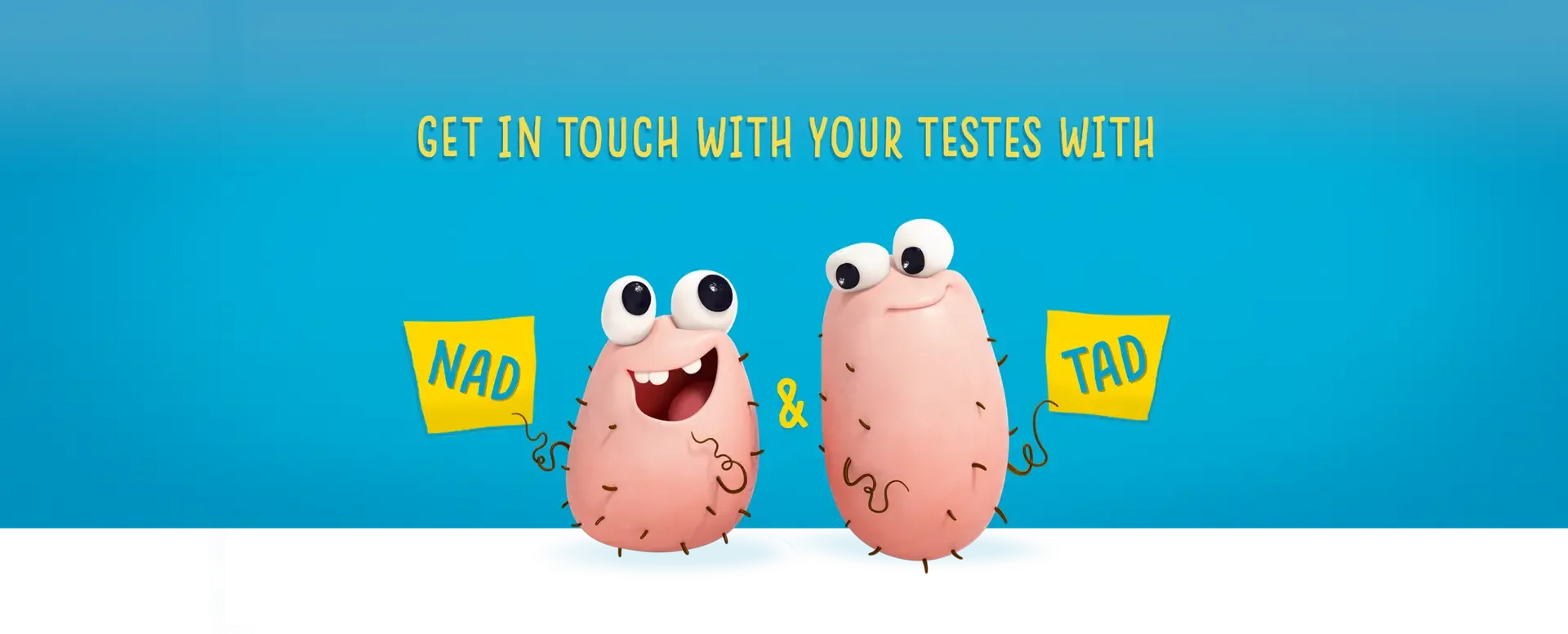
Meet Nad & Tad
We're two testicles on a mission to help men get on the ball and check themselves for testicular cancer. We know the importance of monthly self-exams and we're here to show you what to look for and how to do it. Let's make checking your balls as normal as brushing your teeth!
Step-by-Step Guide
Follow these simple steps to perform a thorough testicular self-examination.
How to Do a Self Exam
The best time to check is during or right after a warm shower when your scrotum is relaxed. The whole process takes less than a minute!
Hold your testicle between your thumbs and fingers
Roll it gently between your fingers
Feel for any lumps, bumps, or changes
Check both testicles individually
Don't forget the epididymis (the tube behind each testicle)
What to Look For
You're looking for anything that feels different from your normal. Every guy is unique, so get familiar with what's normal for you!
Lumps: Any hard lump or nodule (even pea-sized)
Change in size: One testicle larger than usual
Change in shape: Irregular shape or texture
Heaviness: Feeling of heaviness in the scrotum
Pain or discomfort: Dull ache in the lower abdomen or groin
When to Check
Pick the same day each month to check yourself. Make it easy to remember—like the first day of the month, your birthday date, or payday!
Monthly: Once a month is all it takes
After a warm shower: When your scrotum is relaxed
Ages 15-35: Most at risk, but all ages should check
Set a reminder: Use your phone calendar
Make it routine: Like brushing your teeth
Heaviness
A feeling of heaviness in one of your testicles can be your body’s way of telling you that something isn’t quite right. While it doesn’t always mean something serious, this sensation can be associated with changes such as swelling, fluid buildup, infection, or changes within the testicle itself. Because the testicles normally feel relatively light and balanced, a new or persistent sense of heaviness is worth paying attention to, especially if it comes with discomfort, a dull ache, or noticeable changes in size or shape. Being aware of how your body normally feels makes it easier to spot these subtle signals early and take action if needed.
In the Dark
Not being in the dark about the signs of testicular cancer can make a real difference when it comes to your health. Testicular cancer is one of the most treatable cancers when caught early, but early detection depends on knowing what to look for. Changes such as a new lump, swelling, firmness, pain, or a persistent feeling that something just isn’t normal are signals your body may be sending you. Paying attention to these signs and taking them seriously empowers you to act sooner rather than later, turning awareness into one of the strongest tools you have for protecting your health.